



We don't build the vessels. We make sure they work.
Abbott On Call is the independent engineering, integration and test partner behind some of the Navy's most active unmanned surface vessel programs. We write the interface requirements, run the test events, inspect the production lines, and stand on the deck when the boat comes back aboard. Because we don't compete to build unmanned vehicles, our assessments carry no organizational conflict of interest and program offices can act on them.
Navy T&E events supported for unmanned maritime systems
sUSVs inspected in production, acceptance and warranty
Autonomous mission scenarios executed at UNITAS 2025
Independent Manufacturing Readiness Assessments of USV builders
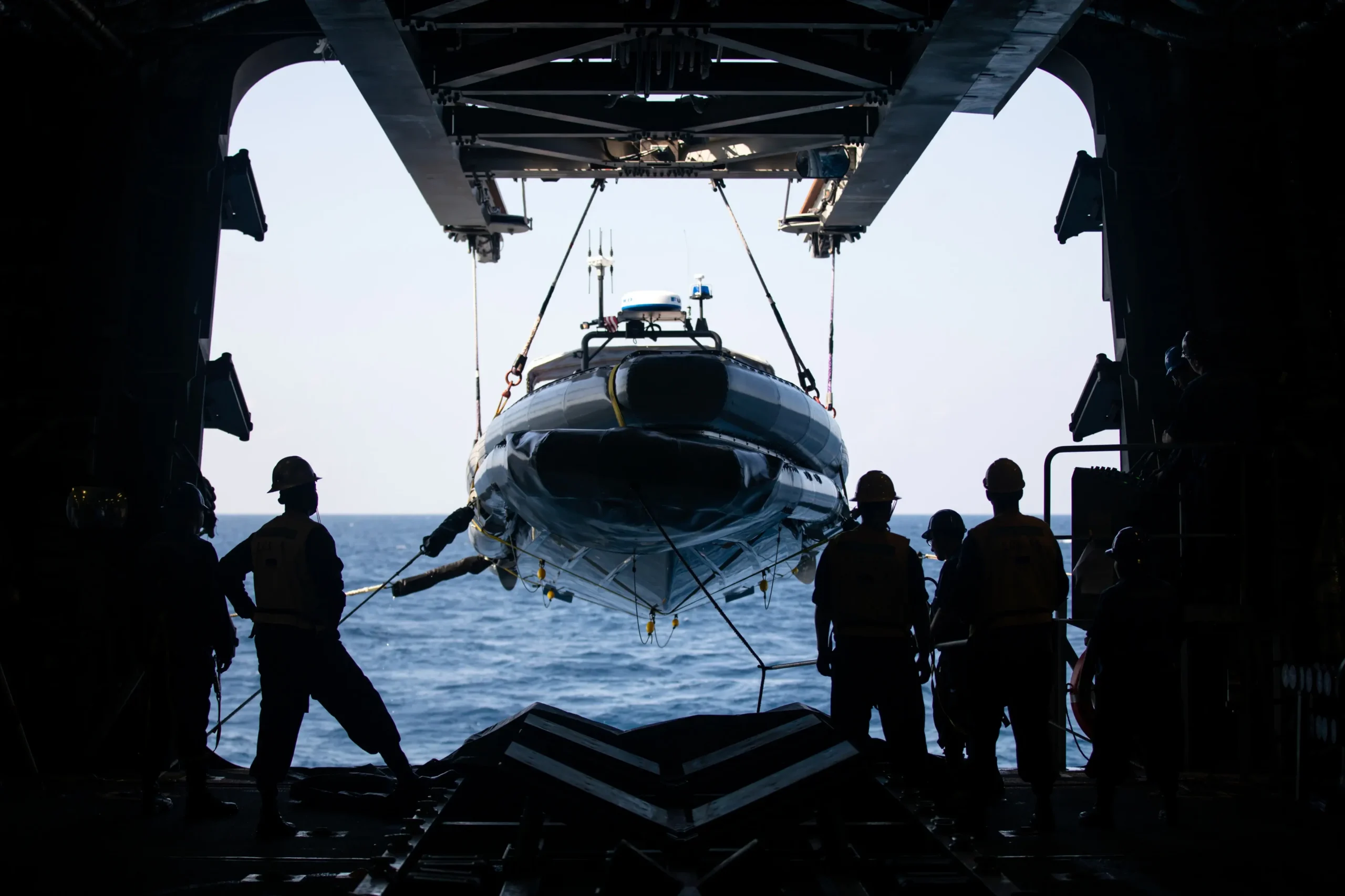
sUSV recovery across five-plus shipboard L&R events
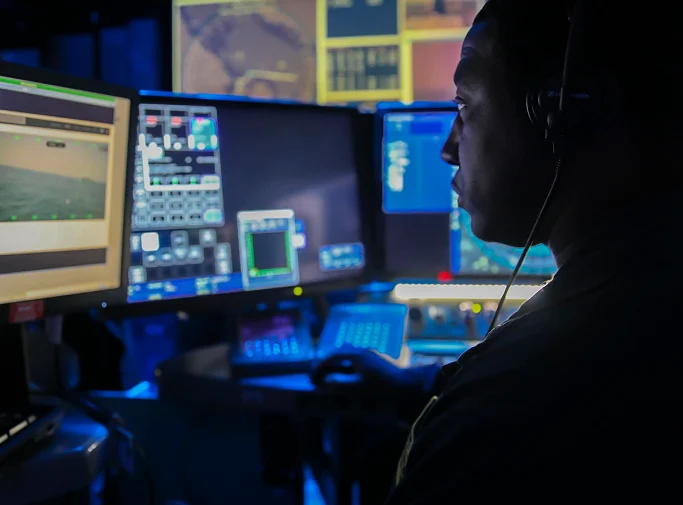
What we do
Unmanned programs move faster than the acquisition machinery around them. Vehicles arrive before the interfaces are defined. Test events get scheduled before the CONOPS exists. Production ramps before anyone has checked whether the builder can actually ramp up.
AOC works in that gap. We have supported unmanned surface and underwater vehicle integration on multiple ships including the Littoral Combat Ship, science-and-technology integration work with USVs and UUVs such as MCM USV and Knifefish and we support the small USV program today, from Model-Based Systems Engineering architecture through production-line inspection, at-sea demonstration, and lessons learned briefed to flag-level leadership.
About Autonomous Maritime Systems
Unmanned Surface Vessels
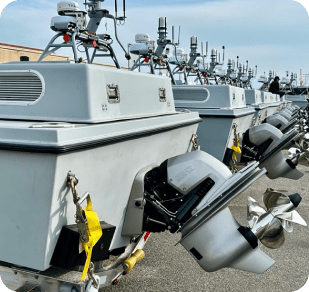
We support the full arc of a USV program: requirements, integration, production oversight, test, fielding, and the sustainment tail behind it.
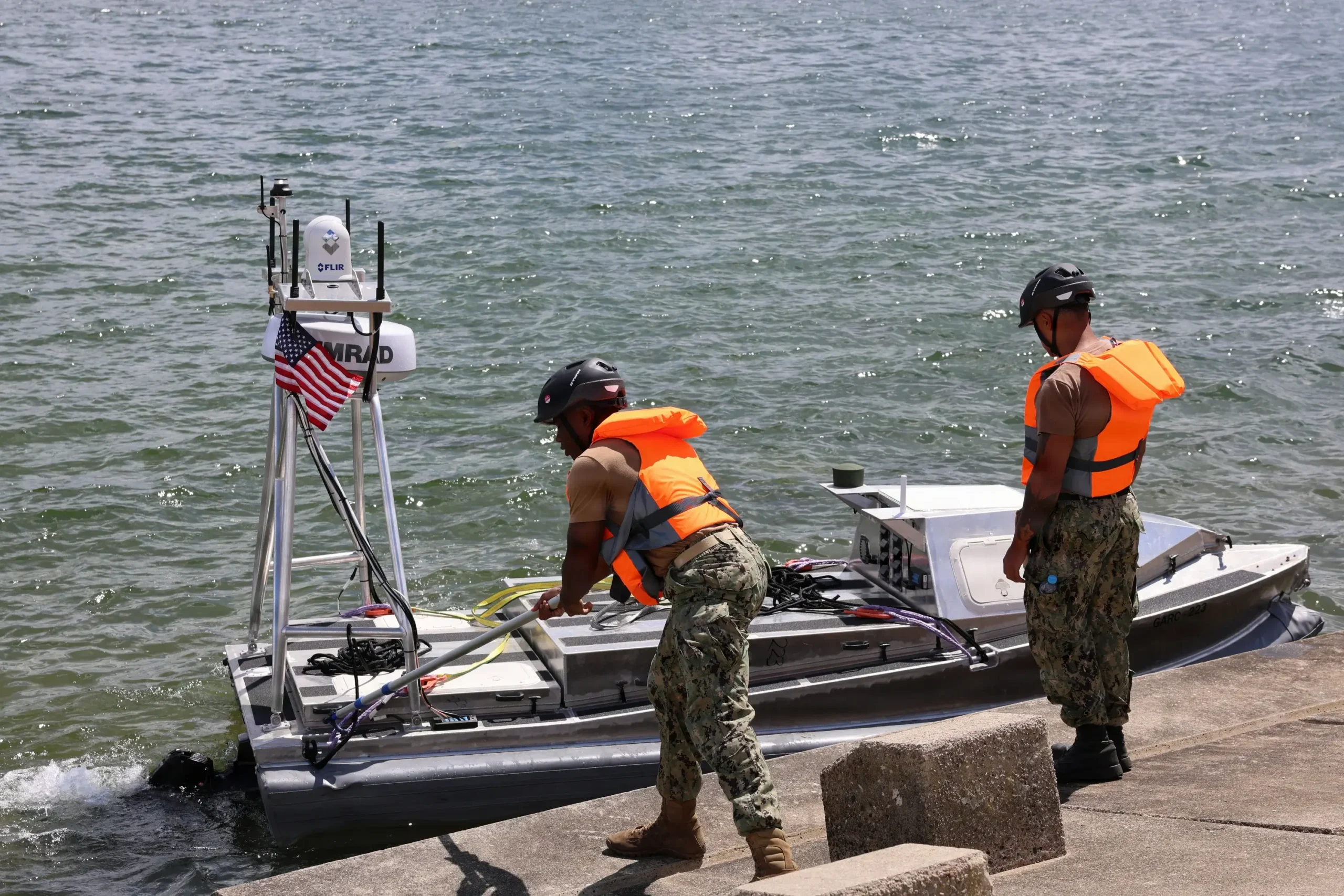
For Navy PMS 420, AOC has inspected more than 750+ small unmanned surface vessels across production, acceptance and warranty activities, generating documentation covering material inventory status, production-line impacts, quality metrics and program progress. We serve as the technical subject matter expert to the Defense Contract Management Agency during sUSV acceptance - and have trained DCMA personnel to perform those inspections themselves.
Our engineering has covered hull-damage and structural-strength analysis that kept vehicles in test with minimal downtime, and Failure Mode, Effects and Criticality Analysis that traced launch-and-recovery damage to root cause.
Autonomous System Integration
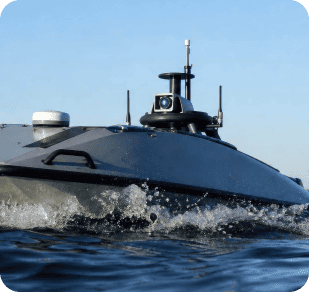
Getting an autonomous vehicle to work is one problem. Getting it to work from a ship is a different one – and it is the one we solve.
AOC develops and manages the technical requirements that integrate unmanned systems into Navy ships, aircraft, other platforms and shore facilities.
We authored the Interface Control Document governing hardware and software interfaces among ships, submarines, aircraft, UUVs, UAVs and USVs, weapons, combat systems, computing environments, exterior communications and watercraft launch and recovery.
Autonomy & Navigation
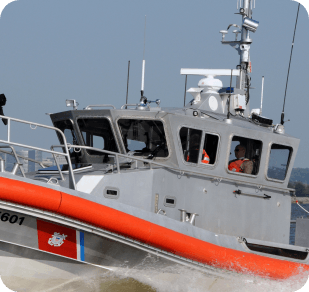
Autonomous vehicles are only as good as the navigation picture they launch with.
AOC developed and installed the GPS repeater system on the Littoral Combat Ship specifically so USVs can complete pre-mission functional checks prior to launch.
That work ran the full engineering cycle: design studies, foundation and structural design, vibration and shock analysis, power distribution, cable routing, electromagnetic interference analysis against the ship's other systems.
3D CAD models, ship installation drawings approved by the planning yard, and the Engineering Change Proposal that authorized installation.
Sensor Integration
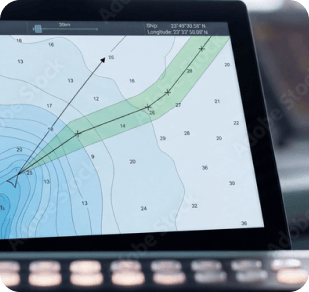
AOC integrates and verifies the sensor and antenna interfaces that unmanned operations depend on – line-of-sight and mission-zone antennas, VHF and Iridium antennas, radio antenna boxes, RF test ports, and the sensor stations defined in the platform interface baseline.
On the test side, our instrumentation and data acquisition work covers strain, motion, load, vibration and acoustic sensors, with electromagnetic interference and compatibility evaluation to confirm that communications, radar and combat systems can coexist aboard a single hull.
Payload & Mission System Integration
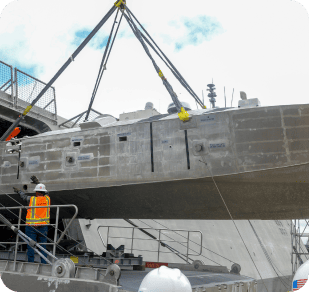
Modularity is the whole premise of an unmanned mission package, and AOC has spent more than two decades making it real on operational ships.
We perform mission package laydown analysis to determine the optimal arrangement of modules within a ship's modular spaces while holding weight and stability compliance.
We have integrated Surface Warfare, Mine Countermeasures and Anti-Submarine Warfare packages; 30mm gun modules and Surface-to-Surface Missile Modules; MH-60 and MQ-8 aircraft with their support equipment and payloads; and vertical take-off unmanned aerial vehicles, coordinating with PMA-266 to enable the Dynamic Interface testing that preceded MQ-8 Fire Scout fleet deployment.
Communications & Data Links
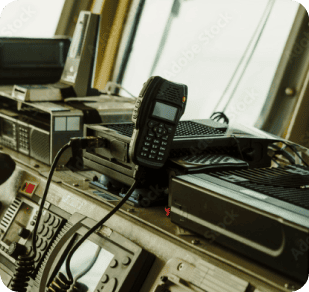
Unmanned operations live or die on the link. AOC has developed, documented, inspected and verified the shipboard communications infrastructure that carries it.
That includes the radio equipment cabinet, control cabinet, radio antenna box, RF test port, line-of-sight antennas and the launch-and-recovery antenna installed across LCS seaframes; the classified LAN connection between vehicle control and mission package computing; exterior communications interfaces; and the electrical, power, cooling and data interfaces that support them. We processed the ship change paperwork to install this hardware on both Freedom and Independence variants, and we inspect the installed interfaces on the ships themselves.
Remote Monitoring & Control
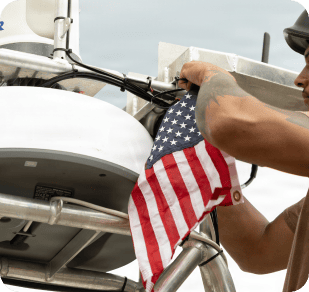
The interface baseline AOC authors and maintains covers the software command-and-control interfaces between the platform and its mission systems, alongside the hull, mechanical, electrical and communications interfaces – more than 1,000 traced requirements in total.
Before every mission package embark, we run an integration risk assessment comparing that ship's interface verification status – over 2,500 requirements per hull – against the planned loadout, and publish the result as an Integration Snapshot Technical Report in a red/yellow/green format built for a program manager to act on in a single look. Monthly, we publish the interface metrics and issue-burndown reporting the Navy uses to schedule new technology test events, including the GPS repeater and fuel flowmeter installations that sUSV operations depend on.
Launch & Recovery Systems
Launch and recovery is where unmanned programs break. AOC has supported the NSWC Panama City Launch, Recovery and Handling IPT for more than five years and currently supports the Barracuda System of Systems IPT.
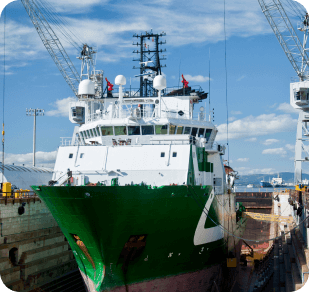
Twin Boom Extensible Crane strength upgrade
AOC manages the TBEC upgrade to raise the system's rated load to handle a fully fueled unmanned surface vehicle and to meet NAVSEA OP-4 requirements for weapons handling certification. The work has run from shipboard hydraulic testing aboard LCS 36 at Austal, through an analysis of alternatives, preliminary and critical design reviews, structural, vibration, shock and hydraulic analysis, and software safety in accordance with MIL-STD-882 – with schedule and cost tracked and reported up to and including Congress.
Independence-variant stern fender
After watercraft were being damaged during launch and recovery, AOC assessed impact velocity and energy, selected the material, prototyped and demonstrated it to government representatives, produced the ship installation drawings, coordinated vendor material against the ship's schedule, wrote and adjudicated the ship change document, drafted the risk message authorizing emergent installation, and provided on-site engineering to the Alteration Installation Team at the test event. The Navy rated the effort Exceptional for quality in CPARS.
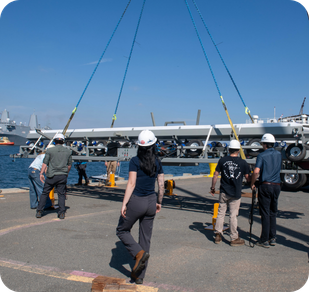
CONOPS and test procedures
AOC authored the launch-and-recovery CONOPS test plans for 8-, 24- and 32-unit GARC operations and for CORSAIR, on both Independence- and Freedom-variant hulls, and integrated and validated launch-and-recovery upgrades across Integrated Battle Problem 24.1 and 25.1 and Joint Exercise SOCAL. Across five-plus shipboard events on the Independence variant following the TBEC upgrade, recovery success was 100%.
Autonomous System Prototyping
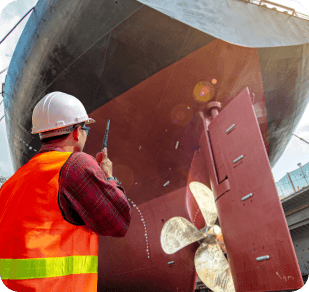
AOC takes maritime prototypes from concept to fielded hardware: concept development and digital modeling, fabrication, test planning and execution, data collection and analysis, engineering documentation and ship change drawings, on-site installation and integration, and lifecycle sustainment.
For unmanned programs specifically, our engineers supported rapid development of a specialized USV launcher for UNITAS 2025 and developed requirements for sUSV support equipment including a handling cart designed for the shipboard environment and a commercial power transport mover tailored to the program.
CONOPS & Operational Demonstrations
A concept of operations written at a desk is a hypothesis. AOC writes them, then goes and proves them.
U.S. Navy unmanned surface vessels take part in a sinking exercise targeting the decommissioned amphibious assault ship USS Peleliu (LHA 5) during RIMPAC 2026. U.S. Navy video courtesy of Commander, U.S. 3rd Fleet. Pacific Ocean, July 17, 2026.
The appearance of U.S. Department of War (DoW) visual information does not imply or constitute DoW endorsement.
UNITAS 2025
AOC planned, organized and executed fielding and operations for the sUSV1 SWARMEX and Tsunami SE-RAS exercises, demonstrating more than ten autonomous mission scenarios of increasing operational complexity across multiple contractors and agencies. We managed the schedules, logistics and safety criteria, validated the outcomes, captured tactical lessons learned, and briefed findings directly to flag-level officials and government stakeholders – turning fleet-observed performance gaps into vehicle development recommendations.
Modeling the CONOPS first
AOC leads an Innoslate-based Model-Based Systems Engineering effort for the sUSV GARC System of Systems that captures stakeholder requirements, CONOPS and Level 0 through Level 2 requirements traceable to test events. We also build a Cameo Systems Modeler architecture for sUSV integration with designated host platforms that generates the Interface Control Document directly from the model.
Safety, from the start
AOC prepared and executed safety plans and risk matrices for seven or more major sUSV test events between 2022 and 2025, including WSESRB assessments coordinated with NAVSEA 05D, and authored operating procedures for unmanned maritime systems drawn from test-event and fleet-operator feedback.
Why Program Offices Bring Us In
A concept of operations written at a desk is a hypothesis. AOC writes them, then goes and proves them.

No OCI.
We don't build unmanned vehicles or compete for production awards. Our assessments of builders, designs and test results are independent – and stay that way.
We were there for the first one.
AOC has supported unmanned and modular systems integration on LCS since the program's inception in 2002, and holds the interface baseline the fleet uses today.
We are on the waterfront
Test events, production lines, shipyards, sea trials. Our engineers are embedded, not advisory.
We document what we find.
Test plans, procedures, IV&V forms, trouble reports tracked to closure, trip reports, risk matrices - delivered in the format your program office already uses.
Request a capability briefing
Download the AOC capability statement